

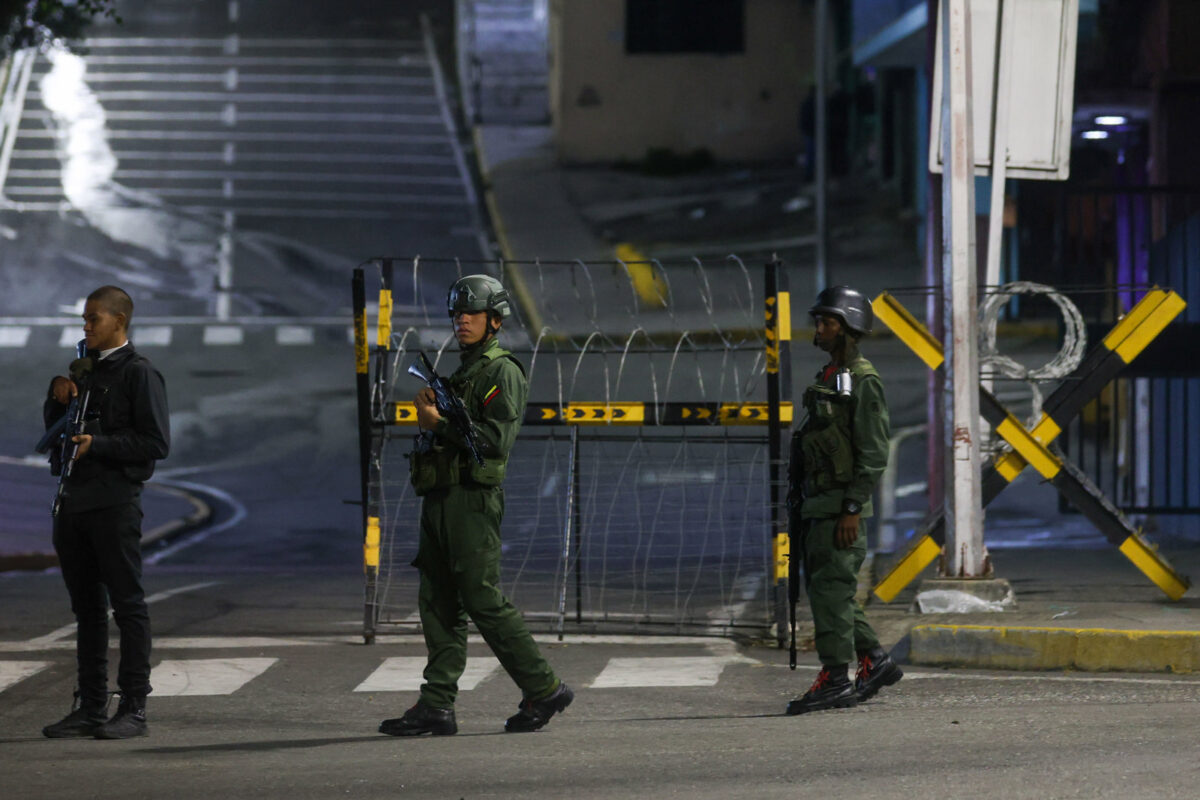

In the early hours of January 3, 2026, US forces entered Venezuela and struck multiple strategic targets, marking the first open attack by a foreign power on Venezuelan soil in its republican history.
Following the attacks, it was confirmed that President Nicolás Maduro and his wife, Cilia Flores, had been captured and removed from the country by US soldiers. While the government still officially retains control, officials have called on supporters to take to the streets and activate “active resistance” protocols in the coming hours.
Citizens remain on edge, awaiting more information about Maduro’s current whereabouts and the future of the government that has held power in Venezuela for 27 years. The international community appears divided, with some expressing support for and others condemning the operation.
Explosions Overnight
Around 1:00 a.m., social media users reported loud explosions in Caracas and several central cities. In areas such as the 23 de Enero parish, near the Miraflores Palace, multiple blasts shook the ground and windows. Columns of fire and smoke were also seen in other parts of the city.
Explosions were reported across Caracas, including neighborhoods such as Caricuao, El Paraíso, El Valle, Los Ruices, Altamira, Santa Mónica, and La California. Power outages were reported in some areas. Several videos circulated online, showing planes and helicopters believed responsible for the attacks.
Several strategic points in the capital were targeted, including Fuerte Tiuna, the country’s main military base. Hundreds of civilians living in buildings of the Gran Misión Vivienda Venezuela within the military zone were forced to evacuate, as attacks targeted key battalions stationed there.
Bombardments were also reported at La Carlota Air Base in eastern Caracas. Images from Associated Press show burn marks and impact sites on the runway, though hangars and aircraft remained intact.
So far, no collateral damage has been reported in civilian areas or institutional buildings, such as the Miraflores Palace or the Federal Legislative Palace. However, El Diario confirmed that one of the country’s main telecommunications stations in El Volcán, El Hatillo, was attacked. Defense Minister Vladimir Padrino López stated that a general assessment of material damage, injuries, and casualties—mostly soldiers guarding the bases—is still underway.
In Other Cities
Beyond Caracas, authorities confirmed attacks in Miranda, La Guaira, and Aragua states. Targets included Libertador Air Base in Maracay (Aragua), Caracas Óscar Machado Zuloaga Airport in Charallave, and Higuerote Airport, both in Miranda state.
La Guaira was one of the regions most affected after Caracas. Videos on social media showed bombardments at the port of La Guaira, with the perimeter fence destroyed along with several shipping containers. Attacks were also reported at the Naval Military Academy in Catia La Mar, on Mamo Mountain near the Military Circle, and at the site of the former town of Carmen de Uria, where a Special Forces Training Complex was seen engulfed in flames.
Extraction of Maduro
Just hours after the attack, US President Donald Trump confirmed on Truth Social the involvement of a US special forces team in the strikes. He announced the capture of Nicolás Maduro and his wife, Cilia Flores, who were flown out of the country. Details of the operation remain unclear, although officials told CBS that the Delta Special Operations Detachment was reportedly in charge of the mission.
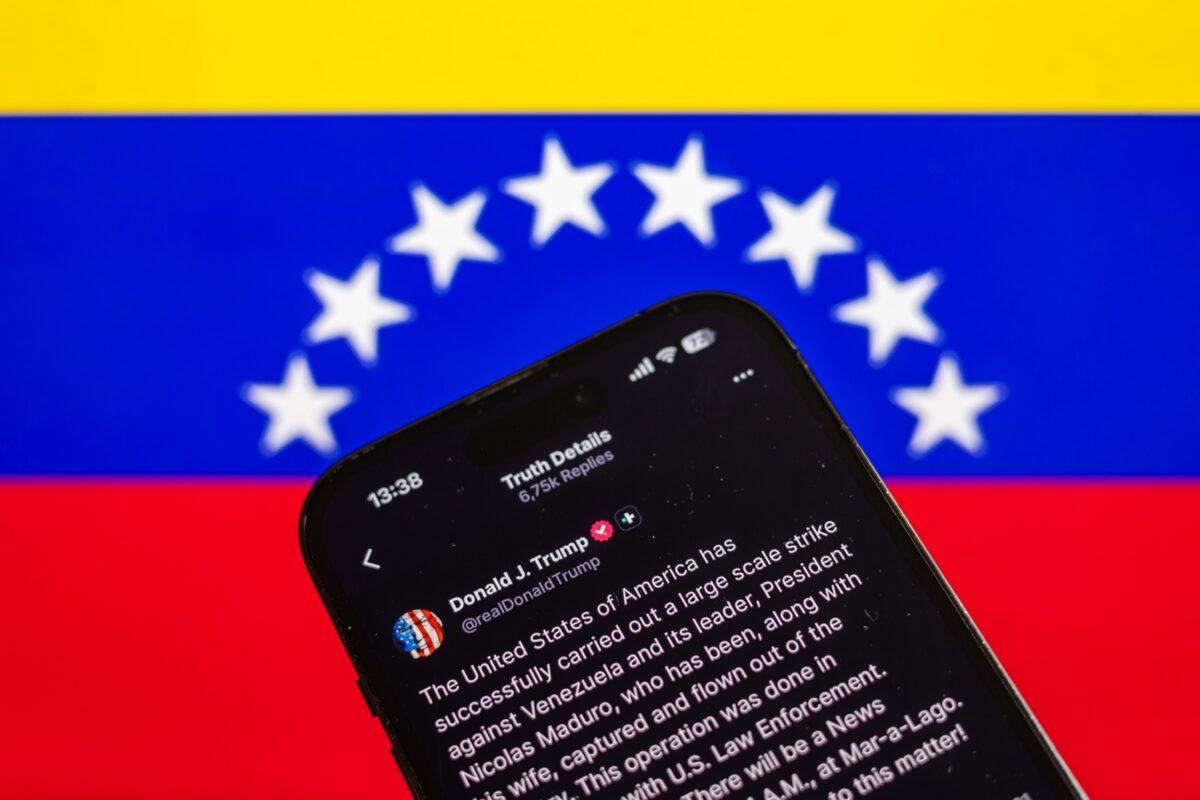
“The United States has successfully carried out a large-scale attack against Venezuela and its leader, Nicolás Maduro, who was captured and flown out of the country along with his wife. This operation was conducted in coordination with US law enforcement,” Trump wrote.
Vice President J. D. Vance commented on X: “The president offered multiple off ramps, but was very clear throughout this process: the drug trafficking must stop, and the stolen oil must be returned to the United States. Maduro is the newest person to find out that President Trump means what he says. Kudos to our brave special operators who pulled off a truly impressive operation.”
Previously, US Attorney General Pam Bondi stated on X that both Maduro and Flores have been charged by the Southern District of New York with narcoterrorism conspiracy, conspiracy to import cocaine, possession of machine guns and destructive devices, and conspiracy to possess machine guns and destructive devices against the United States. She indicated that both are expected to appear before US courts soon, suggesting they may be brought to the United States.
State of External Commotion
Following the US attack, state-run Venezolana de Televisión (VTV) released a statement condemning the strike and announcing the activation of the state of external commotion decree previously signed by Maduro in October 2024. Shortly after, Defense Minister Vladimir Padrino López posted a video on social media confirming the strikes on military targets and calling for calm among citizens.
In a telephone interview with VTV, Vice President Delcy Rodríguez admitted for the first time that the whereabouts of Nicolás Maduro and Cilia Flores were unknown, and demanded proof of life from the United States. “People to the streets! Militia activated! All plans activated! (Maduro) has given very clear orders to the Bolivarian National Armed Forces to, in perfect military, popular, and police coordination, activate all national defense plans, and they are now fully activated,” she declared.
A similar call was made by Interior, Justice, and Peace Minister Diosdado Cabello, who ordered all structures of the Bolivarian Militia and the United Socialist Party of Venezuela (PSUV, in Spanish) to take to the streets and engage in what he called “active resistance” against US attacks.
“These rats attacked. Now they will regret it for the rest of their lives for what they did. We will immediately assess the attacks, the damages, and continue moving forward, always united,” he said.
Other government figures, including Attorney General Tarek William Saab and deputy Nicolás Maduro Guerra, son of the deposed leader, issued statements denouncing the situation to the international community. Foreign Minister Yván Gil indicated that Venezuela would take the case to all necessary international bodies to demand Maduro’s release.
“We will exercise our rights. We need proof of life of the leader. The United States and President Trump must take responsibility for his physical integrity and immediately return Constitutional President Nicolás Maduro and First Lady Cilia Flores. We have received widespread support from around the world, and there should be no doubt that the world will rise to support Venezuela,” he added.
International Reactions
The US operation against Nicolás Maduro drew mixed reactions from the international community. One of the first heads of state to comment was Colombian President Gustavo Petro, who requested emergency meetings at the United Nations and the Organization of American States (OAS), describing the operation as “an aggression against the sovereignty of Venezuela and Latin America.”
Colombian Defense Minister Pedro Sánchez announced the deployment of units along the Venezuelan border and the activation of a Unified Command Post (PMU) to manage potential refugee flows. Security will also be reinforced in border cities and at US and Venezuelan diplomatic missions to prevent any possible terrorist activity.
Brazilian President Luiz Inácio “Lula” da Silva condemned the bombings, stating they “crossed an unacceptable line” and set a bad precedent for the region. Mexican President Claudia Sheinbaum expressed a similar view, while geopolitical allies such as Cuba, Russia, and Iran offered unconditional support to the Maduro government. Other countries, including Chile and Spain, voiced concern over what they described as a unilateral military action by Washington.
On the other hand, Argentine President Javier Milei supported Maduro’s detention, as did Ecuador’s Daniel Noboa and Ukraine’s Volodymyr Zelensky. The Bolivian government issued a statement supporting the Venezuelan people and advocating for “a process of democratic recovery, restoration of constitutional order, and full guarantee of human, civil, and political rights.”


